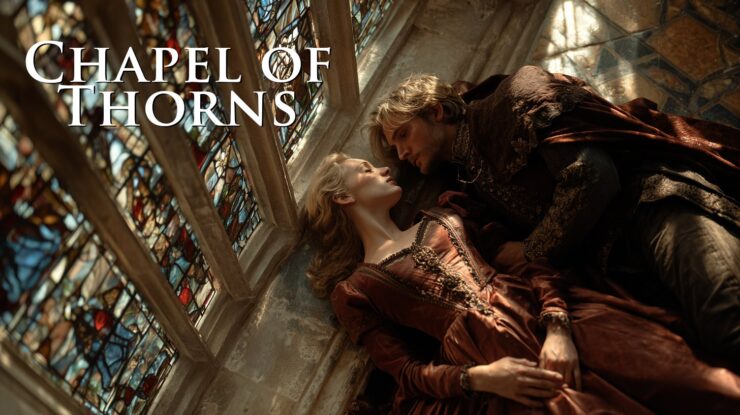
Step into the shadowed world of “Chapel of Thorns: a reclamation ritual”, a four-movement audiovisual journey blending Gothic storytelling, hypnotic music, and mesmerizing visuals.
Experience the haunting beauty of ritual and desire as masked and unmasked figures explore passion, tension, and the sacred in a Gothic cathedral, accompanied by atmospheric music, drones, and cinematic scoring. Every frame, every note, is designed to immerse you in a darkly poetic, sensuous world.
Prologue and epilogue voiceovers guide you through the movements:
Movement I – Shadows Stir
Movement II – Grinding Ritual
Movement III – Union and Claim
Movement IV – Ashes and Liberation
Witness the interplay of desire, ritual, and reclamation in this unique fusion of music, narrative, and imagery.
#ChapelOfThorns #ReclamationRitual #GothicArt #CinematicMusic #DarkAtmosphere #AIVisuals #HypnoticSoundscape #RitualisticArt #CinematicExperience #AIArt #DarkRomance
Chapel of Thorns – Production Notes
Overview
Chapel of Thorns is a four-movement audiovisual project combining music, narrative voiceover, and AI-generated visuals into a ritualistic cinematic experience. The work explores tension, desire, reclamation, and liberation within a Gothic cathedral setting.
Structure & Movements
- Prologue – Abstract voiceover sets the stage: fire, ritual, chaos, obsession.
- Movement I – Shadows Stir (F minor, 60 BPM): Establishing tension, atmosphere, and introduction of the cathedral space.
- Movement II – Grinding Ritual (A major, 80 BPM): Escalation of energy and choreography of passion. Includes masked couples and ritualistic imagery.
- Movement III – Union and Claim (D# minor, 96 BPM): Climax of ritual, heightened intimacy, and struggle for transcendence.
- Movement IV – Ashes and Liberation (C# major, 85 BPM): Release, aftermath, and symbolic liberation.
- Epilogue – The ritual concludes, but its echo and fire remain.
Narrative Elements
- Voiceovers: Delivered as interludes between movements, alternating male and female perspectives (first-person view). Abstract, poetic, and ritualistic in tone.
- Devouring Mother Motif: A recurring flash image — a haggard witch in Victorian garb with a crown of thorns — punctuates her spoken lines, representing the lurking, admonishing presence.
Visuals
- Primary Setting: Gothic cathedral interiors — arches, stained glass, stone carvings, spiral staircases, altar spaces.
- Characters: Male and female figures, exhausted and entwined in ritual sequences, as well as groups of masked couples.
- B-Roll: Architectural details (windows, statues, carvings, candlelight, dust-filled beams of light). Used for transitions and atmospheric depth.
- Orchestra: A small ensemble of strings and piano is depicted performing in cathedral space, woven into the ritualistic mood.
Sound Design
- Musical Keys & Tempos:
- I – F minor, 60 BPM
- II – A major, 80 BPM
- III – D# minor, 96 BPM
- IV – C# major, 85 BPM
- Transitions: Atmospheric drones, risers, braams, piano stingers, and swells used to bridge tonal shifts between movements.
- Textures: Heavy use of drones, pads, tonal beds, and reverse cymbals for immersion.
Production Approach
- AI Tools: MidJourney for imagery, ElevenLabs for voiceovers, video editing software for final assembly and mixing.
- Workflow: Iterative generation of imagery, refining prompts to balance atmosphere, symbolism, and “pseudo-erotic” undertones without explicitness.
- Visual Strategy: Use of repetition (motifs like the devouring mother), atmospheric details (dust, haze, colored light), and extreme close-ups for emotional impact.
Themes
- Ritual vs. Desire
- Chaos vs. Control
- Forbidden Union
- Liberation through transgression